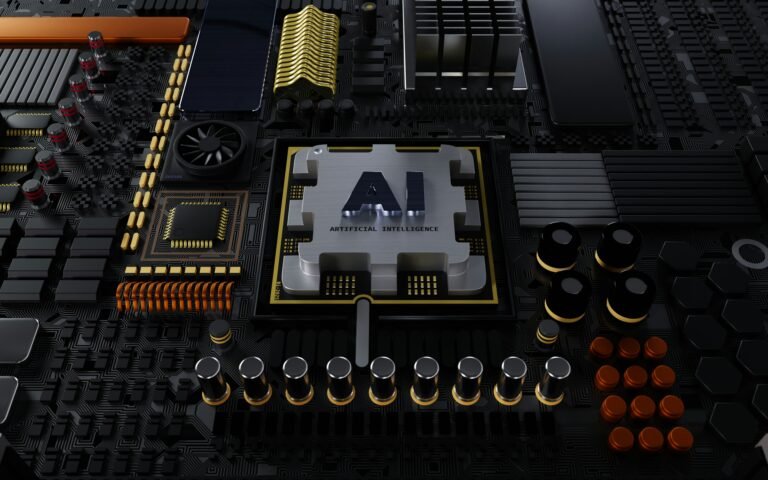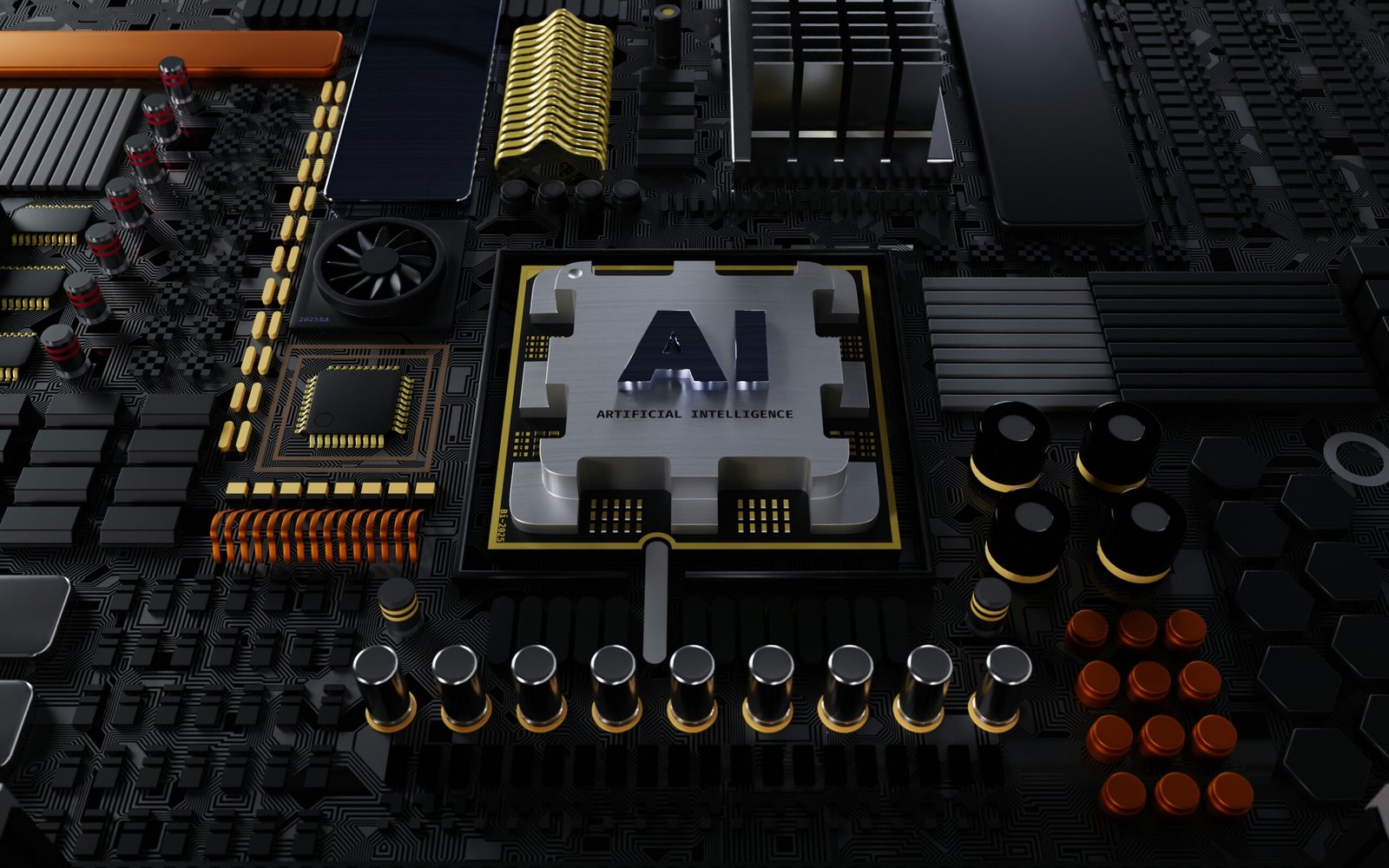
AI Chips Explained: How Neural Processors Are Changing Technology in 2025
Keywords: AI chips, neural processors, NPU, TPU, AI accelerator, AI chip 2025, Apple Neural Engine, Qualcomm AI Engine, Nvidia H200, edge AI, on-device AI.
🌟 Introduction
In 2025, artificial intelligence (AI) is embedded in countless devices and services — from the phone in your pocket to cloud datacenters powering large language models. This rapid growth is driven not only by improved algorithms and bigger datasets, but also by a new generation of specialized hardware often referred to as AI chips or neural processors.
This long-form guide explains what AI chips are, why they matter, how they differ from CPUs and GPUs, the major AI chip architectures in 2025, real-world applications, industry players, challenges, and what the next 5–10 years might look like for AI hardware. It is written for beginners and intermediate readers who want a deep, practical understanding.
🔎 What is an AI Chip?
An AI chip is a piece of hardware specifically designed to accelerate machine learning (ML) and deep learning workloads. Unlike general-purpose CPUs, AI chips are optimized for the matrix multiplications and tensor operations at the heart of neural networks. These optimizations result in huge performance gains and energy savings when running models for tasks such as image recognition, speech processing, natural language understanding, and inference at the edge.
AI chips can take many forms:
- NPUs (Neural Processing Units) — common in mobile devices; optimized for on-device inference and efficient neural compute.
- TPUs (Tensor Processing Units) — originally developed by Google for data center training and inference.
- AI accelerators integrated in GPUs or as separate ASICs — used in data centers and edge devices.
- Hybrid SoCs that combine CPU, GPU, NPU and other IP blocks onto one die for efficient system-level performance.
⚙️ CPU vs GPU vs NPU vs TPU — What’s the Difference?
CPU (Central Processing Unit)
The CPU is a general-purpose processor designed for a wide range of tasks. It handles operating system functions, complex control logic, and serial workloads. CPUs are flexible but inefficient for large-scale matrix operations that dominate deep learning.
GPU (Graphics Processing Unit)
GPUs were originally built to accelerate graphics by processing many parallel threads. That same parallelism suits matrix math in deep learning, making GPUs the workhorses of AI training and inference for much of the 2010s and early 2020s. GPUs offer a balance of programmability and high throughput.
NPU (Neural Processing Unit)
NPUs are dedicated accelerators designed specifically for neural network inference (and sometimes training). They provide high efficiency for low-power scenarios — especially important for smartphones, IoT devices, and autonomous sensors. NPUs reduce latency and increase privacy by enabling on-device AI.
TPU (Tensor Processing Unit)
Google’s TPUs are custom silicon designed for tensor operations. TPUs are used heavily in cloud datacenters for both training large models and serving inference. TPUs are a form of accelerator similar in spirit to NPUs but focused on different deployment scales (cloud vs edge).
Summary table:
| Processor | Best for | Strengths | Typical Use |
|---|---|---|---|
| CPU | General tasks | Flexible, controls system | OS, logic, serial tasks |
| GPU | Parallel compute | High throughput, programmable | Training models, graphics |
| NPU | On-device AI | Low power, low latency | Phones, IoT, cameras |
| TPU | Large ML workloads | Extremely fast tensor ops | Cloud training & inference |
📜 A Short History: How AI Chips Evolved (2010 → 2025)
The rise of AI chips is a story of necessity: neural networks grew larger and more useful, and general-purpose hardware could not keep up with the cost, speed, or power demands of these models.
2010–2015: GPU Acceleration
GPUs began to be used for deep learning around 2012 when researchers discovered GPUs were excellent at matrix math. Companies like NVIDIA shifted focus, delivering libraries (CUDA, cuDNN) that made deep learning practical.
2016–2019: Early AI Accelerators & Edge Inference
Mobile devices started including dedicated accelerators for specific ML tasks (image and voice processing). Google introduced the TPU (2016) for datacenter workloads.
2020–2023: Mainstreaming NPUs & AI Everywhere
NPUs became common in flagship phones (Apple’s Neural Engine, Qualcomm’s Hexagon NPU, MediaTek’s APU). Edge AI use cases expanded (face unlock, on-device transcription, camera enhancements).
2024–2025: AI Chips for Large Models and Real-Time Edge AI
With foundation models and LLMs growing, the market bifurcated: massive datacenter accelerators for training (NVIDIA Hopper/H200, Google TPU v4/v5) and efficient on-device NPUs for real-time inference (Apple Neural Engine in A18/M4, Qualcomm AI Engine in Snapdragon 8 Gen 4).
🔬 Anatomy of an AI Chip
While implementations vary, modern AI chips share several common building blocks:
- Matrix multiply units (MMUs): Accelerate large matrix and tensor multiplies.
- Vector processing units (VPUs): Handle vector math and SIMD-style operations.
- On-chip memory / SRAM: Very fast local memory to avoid hitting slow DRAM.
- High-bandwidth memory (HBM): Used in datacenter accelerators for huge models.
- Interconnects: High-speed links between cores (e.g., NVLink, chiplet interconnects).
- Programmability: Compiler stacks and runtime frameworks (TensorRT, ONNX Runtime, XLA).
Design trade-offs
Designers balance:
- Performance vs power: More performance often means more power — a critical trade-off for mobile.
- Flexibility vs efficiency: ASICs are efficient but less flexible; GPUs are more flexible but less energy-efficient for specific tasks.
- Latency vs throughput: Real-time on-device tasks prioritize latency; training favors throughput.
🏆 Top AI Chips and Neural Processors in 2025
Below are representative chips (2024–2025 era) that illustrate the state of AI hardware. This list mixes mobile NPUs, datacenter accelerators, and hybrid solutions:
Apple Neural Engine (A18 / M4 series)
Apple’s in-house NPUs power iPhones and MacBooks, emphasizing energy-efficient on-device AI for photography, Siri, and local model execution.
Qualcomm AI Engine (Snapdragon 8 Gen 4)
Qualcomm continues to integrate powerful NPUs with optimized ISPs and modem stacks, enabling advanced on-device features like real-time translation, AI camera effects, and low-power wake-word detection.
NVIDIA H200 / Hopper family
NVIDIA dominates large-model training with data center accelerators (H100/H200), offering huge matrix multiplication capability, HBM memory, and an extensive software stack (CUDA, cuDNN, Triton).
Google TPU v5
Google’s TPUs are optimized for high-throughput tensor operations in the cloud and are used to train and serve large language models and other demanding workloads.
NPU offerings from MediaTek & Samsung
MediaTek’s APU series and Samsung’s Exynos NPUs focus on efficient mobile inference and provide strong value in mid-range and flagship devices.
Custom AI ASICs (Tesla, Huawei, Baidu)
Companies building AI services often create custom ASICs (Tesla Dojo, Huawei Ascend, Baidu Kunlun) tailored for their workloads, reducing costs and improving efficiency.
📱 AI Chips in Smartphones: What They Enable
AI chips in phones enable a host of features that until recently required cloud connectivity or heavy processing power:
- Camera enhancements: Real-time HDR, multi-frame stacking, subject separation, and computational photography that rivals DSLR quality.
- On-device speech recognition: Offline voice assistants with lower latency and better privacy.
- Real-time translation: Conversation-mode translation on-device without sending audio to cloud.
- Personalization: Personalized keyboard suggestions and adaptive battery/profile management driven by local ML.
- Security: Face unlock, biometric templates stored and processed on-device.
These features improve privacy (data stays on-device), reduce latency, and lower network dependency — crucial for areas with limited connectivity.
🖥 AI Chips in Laptops, Edge Devices & IoT
Laptops and edge servers use NPUs and hybrid accelerators to provide advanced local AI capabilities:
- Laptops: On-device AI enables faster content generation, background tasks (real-time noise cancellation), and efficient productivity tools.
- Edge servers: Low-latency inference for premises like factories, retail stores, and edge datacenters.
- IoT sensors: Tiny NPUs embedded in cameras and sensors enable on-device anomaly detection and reduce bandwidth needs.
Edge AI reduces the need to send all data to cloud, improving responsiveness and privacy.
☁️ AI Chips in Datacenters and Cloud
Datacenter AI chips focus on training, fine-tuning, and serving large models:
- Training Tera- and Peta-scale models: GPUs and TPUs with HBM memory enable parallel training of billions of parameters.
- Model serving at scale: Accelerators optimized for batched inference serve thousands to millions of requests per second.
- Specialized ML stacks: Software optimizations (compilers, runtimes) squeeze extra performance from hardware.
Large language models (LLMs) and multimodal models heavily rely on datacenter accelerators to be practical and cost-effective.
🔧 Real-World Use Cases (2025)
1. Mobile Photography & Video
Computational photography pipelines use NPUs for super-resolution, noise reduction, and real-time post-processing. Phones can now shoot cinema-grade footage with intelligent stabilization and real-time color grading.
2. On-device AI Assistants
Voice assistants run core models locally, understanding context faster and maintaining user privacy.
3. Augmented Reality (AR)
Low-latency AI vision makes AR overlays practical on mobile devices for navigation, gaming, and industrial maintenance.
4. Healthcare
Portable diagnostic devices run AI models on-device to analyze scans and provide immediate insights in remote clinics.
5. Autonomous Vehicles
Self-driving stacks use powerful neural processors (and redundant systems) to interpret sensor data in real time.
6. Industrial Automation
Edge AI monitors equipment for faults and predicts maintenance needs before failure.
⚠️ Challenges Facing AI Chips
Despite rapid progress, AI hardware faces several challenges:
Power & Thermal Limits
High-performance AI accelerators consume a lot of power and generate heat. Thermal design and cooling are expensive and limit edge deployment.
Supply Chain & Manufacturing
Advanced chips require cutting-edge foundries (TSMC, Samsung). Capacity constraints and geopolitics can create supply bottlenecks.
Software & Ecosystem
Hardware is useful only if software compilers and frameworks fully utilize it. Fragmented APIs and toolchains increase development effort.
Cost
Custom AI ASICs and HBM memory are expensive; bringing cost down is critical for mass adoption.
Privacy & Security
On-device models must handle sensitive data securely; model theft and adversarial attacks are real concerns.
🔁 Edge + Cloud Hybrid Strategies
Modern AI systems often split workloads between edge and cloud:
- Edge-first inference: Simple or latency-sensitive tasks run on device.
- Cloud fallback: Heavy inference or complex queries are forwarded to cloud accelerators.
- On-device personalization: Local models adapt to user behavior, then optionally sync aggregated updates to cloud.
This hybrid approach balances performance, cost, and privacy.
🔮 The Future: What’s Next for AI Chips?
Several trends will shape AI hardware in the coming years:
1. Heterogeneous Architectures
Combining CPUs, GPUs, NPUs, and domain-specific units on a chiplet-based design will become common to improve flexibility and yield.
2. Better On-Device Learning
Techniques for efficient on-device fine-tuning and federated learning will allow models to personalize without raw-data transfer.
3. Energy-Proportional Designs
Architectures that scale power consumption with workload intensity will be crucial for battery-operated devices.
4. Neuromorphic & Analog Approaches
Research into brain-inspired computing and analog accelerators promises orders-of-magnitude improvements in energy efficiency for certain workloads.
5. Quantum-Assisted AI
In the longer term, quantum processors might accelerate parts of ML pipelines (optimization, sampling), although broad applicability remains research-level in 2025.
📈 Industry Landscape & Key Players
Major companies shaping AI hardware:
- NVIDIA — Data center GPUs & software (CUDA, cuDNN, Triton).
- Google — TPUs and large-scale cloud AI services.
- Apple — In-house NPUs for mobile & laptops (Neural Engine).
- Qualcomm — Snapdragon SoCs with strong mobile NPUs.
- MediaTek & Samsung — Competitive mobile NPUs and SoCs for a range of devices.
- Custom ASIC builders — Tesla, Huawei, Baidu building domain-specific accelerators.
- Foundries (TSMC, Samsung Foundry) — Critical for advanced process nodes (3nm, 4nm).
Startups and academic labs are also innovating specialized accelerators for sparse models, graph neural networks, and energy-efficient inference.
🛠 How Developers Use AI Chips: Toolchains & Frameworks
Developers leverage software ecosystems to deploy models efficiently:
- ONNX — A common model format for portability across runtimes.
- TensorRT, TF-TRT — NVIDIA optimizations for inference.
- XLA — Google’s compiler for TensorFlow/TPU.
- Edge runtimes — TensorFlow Lite, ONNX Runtime, Core ML for mobile deployment.
- Quantization & pruning — Techniques to reduce model size and improve speed on NPUs.
Hardware vendors provide SDKs and compilers to map neural network operations onto chip primitives.
🧭 How to Choose an AI Chip (For Companies & Builders)
Choice depends on use case. Consider:
- Workload: Training (cloud) vs inference (edge).
- Latency: Real-time response demands on-device inference.
- Power budget: Battery-operated devices need ultra-efficient NPUs.
- Cost & volume: Custom ASICs make sense at scale.
- Software ecosystem: Strong SDKs, libraries, and community support reduce time-to-market.
For many integrators, starting with a well-supported SoC (Qualcomm, Apple, MediaTek, Exynos) and using existing runtimes is the fastest path.
📊 Performance Metrics & Benchmarks for AI Chips
When comparing AI chips, common metrics include:
- TOPS (Tera Operations Per Second): Raw operations per second capability.
- Frames per second (FPS): For vision models in real-time processing.
- Latency (ms): Round-trip time for inference.
- Throughput: Inference per second at scale.
- Energy per inference (J/inference): Efficiency metric.
Real application benchmarks (end-to-end tasks) are more useful than synthetic microbenchmarks because they measure practical performance under real workloads.
📚 Case Study: On-device Translation (Example Workflow)
On-device translation showcases the benefits of NPUs:
- User speaks a phrase; audio is captured.
- An on-device speech-to-text model runs using the NPU for low-latency transcription.
- A lightweight translation model (quantized) converts text to the target language.
- Text-to-speech model generates audio locally.
This flow keeps user data private, responds quickly, and works offline — possible because modern NPUs can handle each pipeline stage efficiently.
🧩 Integration Tips: Best Practices for On-Device AI
- Model optimization: Use pruning, quantization (INT8/INT4) and knowledge distillation.
- Memory management: Keep working sets in on-chip SRAM where possible.
- Profiling & monitoring: Continuously measure latency and power on target hardware.
- Graceful degradation: Provide fallback paths when heavy models are not available.
- Security: Encrypt model weights and use secure enclaves for sensitive computations.
🔍 Frequently Asked Questions (FAQ)
Q1: Do I need an AI chip in my phone?
A: If you use smart camera features, offline speech recognition, or AR apps, an AI chip dramatically improves speed and battery life. Most modern flagship phones include NPUs by default.
Q2: Are NPUs replacing GPUs?
A: Not exactly. NPUs excel at efficient inference on the edge. GPUs remain dominant for flexible training workloads in the datacenter. The two complement each other.
Q3: What is quantization and why is it important?
A: Quantization reduces model precision (e.g., from FP32 to INT8) to lower memory footprint and speed up inference on NPUs, often with minor accuracy loss.
Q4: Can small devices run LLMs?
A: Full-scale LLMs still require datacenter resources, but optimized small models and retrieval-augmented techniques allow powerful capabilities on-device or via hybrid cloud strategies.
Q5: Who makes the best AI chips?
A: “Best” depends on the task. NVIDIA leads datacenter GPUs; Apple and Qualcomm provide the best integrated NPUs for mobile; Google TPU shines for cloud tensor workloads.
🧾 Legal, Privacy & Ethical Considerations
AI on-device reduces privacy risks by keeping data local, but it raises other concerns:
- Model bias: On-device models must be audited for fairness.
- Security: Models may leak sensitive patterns—secure storage and encryption are required.
- Regulatory compliance: Healthcare and automotive applications face strict safety and certification requirements.
💡 Final Thoughts: Why AI Chips Matter (and Why You Should Care)
AI chips are transforming how we build software and hardware. They enable:
- Faster, more private AI experiences on devices.
- Scalable training and model serving in the cloud.
- New product categories (AR glasses, smart sensors, intelligent appliances).
In 2025, neural processors are no longer niche components — they are central to device capabilities and product differentiation. Whether you are a developer, product manager, or curious user, understanding AI chips helps you make smarter choices about devices and architectures.
Want more? Follow Chipset.site for deep dives, hands-on tutorials, and product reviews about AI chips, NPUs, and the future of hardware.